
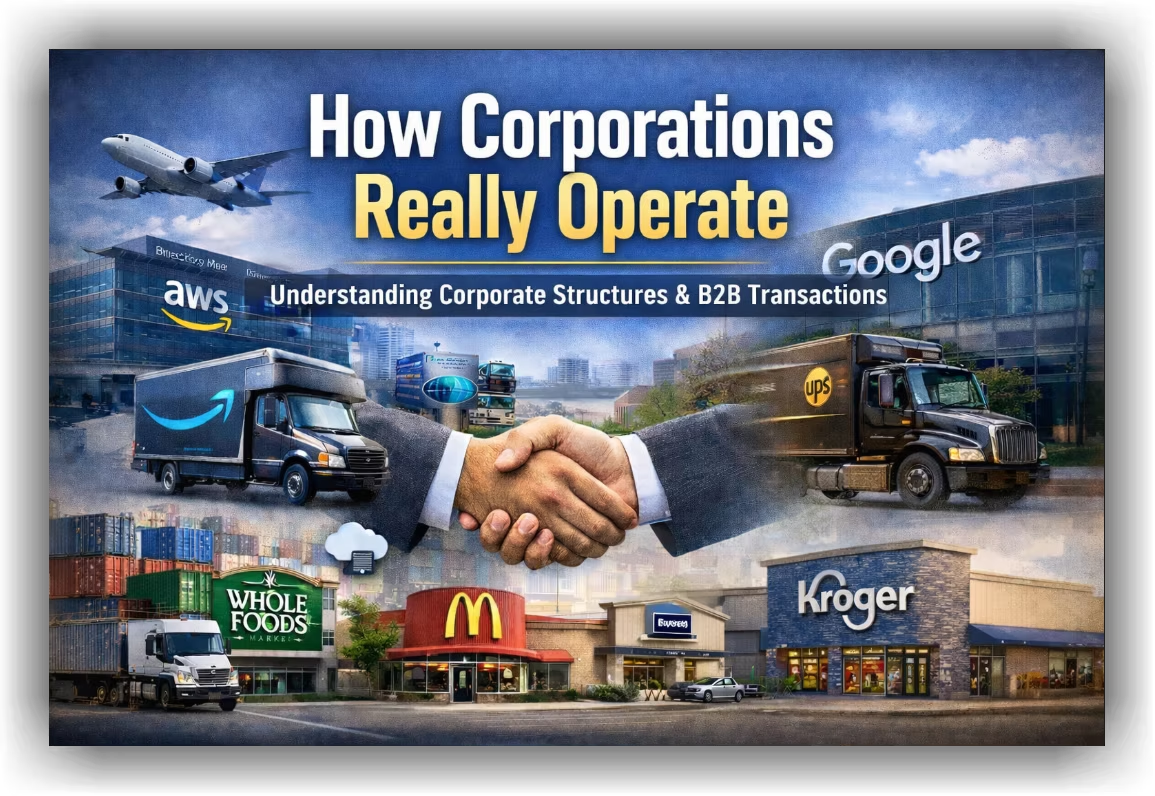
Understanding Corporate Structure & B2B Transactions
There has been a growing conversation online about whether companies can legally do business with other companies they own or control.
Some believe that if companies are connected by ownership, they cannot conduct business with one another.
Others have suggested that if you open a company in another state, it must automatically be registered as a “foreign entity.”
Both of these beliefs are incorrect.
To understand why, we must first understand how corporations are actually structured, how business-to-business (B2B) transactions work in the real world, and what the terms domestic entity and foreign entity truly mean.
This article is not based on opinion.
It is based on how major corporations across the United States operate every single day.
Domestic vs Foreign Entity — Let’s Explain This Correctly
A company is considered domestic in the state where it is formed.
For example:
If a company is formed in Wyoming,
it is a domestic Wyoming company.
This remains true regardless of where the owner lives.
You can live in Texas, California, Florida, or anywhere else and still own a domestic Wyoming company.
The owner’s residence does not determine whether the company is domestic or foreign — the state of formation does.
A domestic Wyoming company can legally:
• sell products nationwide
• provide services nationwide
• invoice clients in any state
• operate online or remotely
• transact globally
without automatically becoming a foreign entity.
When Does a Company Become a Foreign Entity?
A company only needs to register as a foreign entity in another state when it is operating in that state, not simply because the owner lives there.
This is where many people get confused.
If you live in Texas and form a company in Wyoming:
That company is a domestic Wyoming company.
It can:
• provide services to clients in any state
• sell products nationwide
• operate online or through e-commerce
• invoice customers anywhere
• run consulting or digital services
All without automatically becoming a foreign entity.
Why?
Because the company itself is domestic to Wyoming and can conduct business nationwide without needing to register everywhere it has customers.
Foreign registration generally becomes relevant only when a company establishes a physical operational presence in another state.
Examples may include:
• opening a physical office
• hiring employees working from a physical location
• maintaining a storefront or facility
• establishing a consistent in-state operational presence
If a Wyoming-formed company later opens a physical office in Texas or establishes ongoing physical operations there, it may then register in Texas as a foreign entity.
Foreign registration simply means the company was formed in one state and is now operating in another.
It does not mean the company is foreign-owned or doing anything improper.
Why This Matters
Understanding the difference between:
• where a company is formed
• where it operates
• and when registration is required
is critical when discussing corporate structure and multi-entity businesses.
Many corporations form entities in business-friendly states and operate across multiple jurisdictions using properly structured companies.
This is standard corporate practice across the United States.
Why Many Investors & Corporations Use States Like Wyoming
Certain states are widely known for being business-friendly and efficient for corporate formation.
Wyoming and Delaware are among the most commonly used states due to:
• strong corporate privacy laws
• streamlined business statutes
• asset-protection considerations
• favorable tax environments
• simplified ongoing maintenance
For these reasons, many corporate groups use entities formed in these states for holding companies, intellectual property ownership, and investment structures.
Parent Companies, Subsidiaries & Intercompany Transactions
There is also confusion about whether companies under common ownership can legally do business with one another.
Some believe that if companies share ownership, they cannot invoice one another, contract with one another, or exchange services.
That belief is incorrect.
Across the United States, corporations routinely operate using multiple entities within one corporate structure.
These may include:
• Parent companies
• Operating companies
• Holding companies
• Intellectual property companies
• Real estate companies
• Management companies
• Logistics or service companies
Each entity maintains its own legal structure, EIN, bank account, and records.
When one company provides a legitimate service or product to another company — even within the same corporate group — that is a standard and widely accepted business-to-business transaction.
To understand how this works in practice, we can look at how major corporations across America structure their operations and conduct business every day.
Let’s Break This Down in the Simplest Way Possible
Imagine you own:
• A brand
• A building
• A trucking company
• A management company
Instead of putting everything inside one company, you separate them.
Why?
Because each company has its own role.
One company may:
- own the brand
- own equipment
- operate the business
- manage logistics
- own real estate
- provide consulting or management
Each company has:
- its own EIN
- its own bank account
- its own records
- its own agreements
When one company provides a service to another company, that is called:
Business-to-Business (B2B)
This happens every day across America.
FedEx Corporate Structure

FedEx is not one single company performing all functions.
It operates through multiple entities including:
• FedEx Ground
• FedEx Freight
• FedEx Office
• FedEx Express
• FedEx Logistics
Each division has a different responsibility.
Some handle delivery.
Some handle freight.
Some provide printing and business services.
Some manage logistics infrastructure.
These entities provide services to customers and to each other within a structured corporate group.
This is normal corporate structure.
UPS Corporate Structure

UPS also operates through multiple entities and divisions including:
• UPS
• UPS Healthcare
• UPS Supply Chain
• UPS Store locations
• UPS Capital
Each division serves different functions:logistics, healthcare shipping, retail shipping, financial services.
Large logistics companies must operate this way for:
- organization
- liability separation
- operational efficiency
This is standard in transportation and logistics.
Schneider National — Real Trucking Company With Subsidiaries

Schneider operates using multiple legally separate corporate entities that transact with one another internally — the same structure used by most large corporations.
Below are key Schneider entities used for operations, logistics, equipment, and financing.
🏢 Parent Company
Schneider National, Inc.
Publicly traded parent holding company headquartered in Green Bay, Wisconsin.
Owns and oversees all operating subsidiaries.
🚚 Core Operating & Subsidiary Entities
1. Trucking Operations Entity
Schneider National Carriers, Inc.
Primary trucking and transportation operations company.
Handles:
• freight hauling
• over-the-road trucking
• dedicated fleet services
• intermodal transport
This is the main revenue-producing trucking company.
2. Logistics & Brokerage Entity
Schneider Logistics, Inc.
Separate entity focused on logistics and freight brokerage.
Handles:
• supply chain management
• freight brokerage
• 3PL services
• customer logistics solutions
This company invoices customers and coordinates shipments — even when Schneider trucks perform the work.
3. Equipment Ownership & Leasing Entities
(Separate legal structure for assets)
These entities typically own tractors, trailers, and equipment and lease them to operating companies.
Schneider Equipment Company, Inc.
Owns tractors and trailers used by Schneider fleets.
Schneider Finance, Inc.
Handles:
• equipment financing
• leasing programs
• internal equipment funding
• driver leasing programs
SFI Leasing (Schneider Finance Inc. division)
Provides:
• truck leasing to drivers
• fleet leasing
• equipment financing
Amazon & Whole Foods — A Real-World Example Most People Miss


Here’s something most people don’t realize:
Amazon owns Whole Foods.
Yes — the same Amazon people order from daily
also owns one of the largest organic grocery chains in America.
Pause and think about that.
Amazon didn’t just partner with Whole Foods.
Amazon acquired Whole Foods and operates it within its corporate ecosystem.
That means within one corporate group:
• Amazon provides technology infrastructure
• Amazon provides logistics and delivery systems
• Amazon provides payment processing integration
• Whole Foods operates grocery retail locations
• Internal systems and services support one another
These are separate legal entities within a structured corporate group.
And yes — they do business with each other.
Amazon logistics supports Whole Foods delivery.
Amazon technology supports Whole Foods systems.
Amazon infrastructure supports operations.
All of this occurs inside one corporate structure.
This is not unusual.
This is not controversial.
This is how modern corporations operate.
Millions of people shop at Whole Foods every weekwithout realizing they are interacting with a company owned by Amazon.
And behind the scenes?
Structured business-to-business transactions occur between entities inside the same corporate group — just like any large corporation.
Oh, and by the way… do you want to take a wild guess which payment processing company Amazon also uses?

This is standard corporate structure across America.
Major Restaurant Structure Example — McDonald’s
Most people see McDonald’s as one company.
It is not.
McDonald’s operates through multiple entities including:
• McDonald’s Corporation (parent)
• Real estate entities
• Franchise entities
• Intellectual property entities
• Operating companies
Many McDonald’s locations:
- pay franchise fees
- pay rent to property entities
- pay licensing for brand use
These are documented business-to-business transactions inside one corporate structure.
This is standard corporate organization.
Clothing Brand Corporate Structure Example
Many clothing brands operate through multiple entities.
For example:
A parent company may own:
- trademarks and intellectual property
- manufacturing entities
- distribution companies
- licensing entities
- retail entities
Each company invoices for:
manufacturing
distribution
licensing
brand use
logistics
Consumers see one brand.Behind the scenes are multiple structured entities working together.
This is normal corporate structuring across apparel and retail industries.
Understanding B2B (Business-to-Business)
B2B simply means:
One business providing goods or services to another business.
Examples:
- logistics company delivering for retailer
- software company serving business
- management company providing consulting
- property company leasing space
- licensing company licensing brand use
B2B transactions occur every day across every industry.
Stripe & B2B Commerce


Stripe itself publishes educational resources explaining business-to-business payments and invoicing.
Stripe explains that businesses use invoicing and payment platforms to:
- bill other businesses
- manage recurring billing
- manage usage-based billing
- manage contracts
- handle commercial transactions
Stripe’s own resources explain that B2B transactions are a normal part of commerce when properly documented and compliant.
Payment processors expect:
- legitimate business purpose
- accurate documentation
- real goods/services
- proper accounting
- transparency
Large corporations process billions in B2B payments every year using payment processors.
Understanding “Looping” vs Legitimate Intercompany Business
There is significant confusion online between legitimate intercompany transactions and improper activity.
Simply owning multiple companies does not make transactions improper.
Ownership alone does not determine legitimacy.
What determines legitimacy is whether the transaction reflects a real and documented business purpose.
Legitimate intercompany business transactions typically include:
• A real service, product, or operational purpose
• A written agreement between entities
• Proper invoicing between companies
• Clear documentation and recordkeeping
• Accurate accounting and financial reporting
• Compliance with payment processor and banking requirements
When structured and documented correctly, transactions between related companies are a normal part of corporate operations across the United States.
Improper activity would involve situations such as:
• Transactions with no legitimate business purpose
• Fabricated or misleading activity
• No supporting agreements or documentation
• Misrepresentation of services or revenue
• Failure to maintain accurate records
The distinction is not ownership —the distinction is legitimacy, documentation, and transparency.
Structured corporate transactions with legitimate purpose and proper documentation are standard business practice across every major industry.
📁 Additional Templates for Momentum Members
As part of our commitment to helping business owners operate correctly and professionally, we have provided additional contract templates and operational documents exclusively for our Momentum community.
These resources are designed for serious entrepreneurs who are focused on building structured, compliant, and sustainable businesses — not shortcuts.
Our goal is simple:
to equip business owners with real systems, real documentation, and real education so they can operate with clarity, integrity, and transparency in every transaction.
All templates and educational materials shared within Momentum are provided strictly for internal business use and educational purposes.
They are intended to support business owners in implementing proper processes, maintaining organized records, and operating with professional standards.
They are not provided for resale, redistribution, or repackaging.
We believe that businesses built on structure and transparency develop stronger partnerships, stronger credibility, and long-term stability.
This community exists for business owners who are committed to doing things the right way and building companies that can stand the test of time.
🔐 Want Access to the B2B Contract & Intercompany Templates?
Inside Momentum, we’ve added professionally structured templates including:
• Intercompany service agreements
• IP licensing agreements
• Management & consulting agreements
• Intercompany invoice templates
• Corporate documentation templates
These are the same types of documents real corporations maintain to support legitimate business-to-business transactions between related entities.
If you are a business owner who wants to operate with structure, documentation, and transparency — this is for you.
Join Momentum and access the full template library instantly.
Industries That Use Multi-Entity Structures Every Day
Multi-entity corporate structures are not rare.
They are the standard operating model across major industries, including:
Transportation and logistics
Retail and grocery
Technology
Restaurants and franchising
Manufacturing
Real estate and property management
Consulting and management services
Apparel and brand licensing
Consumers interact with these structured corporate groups every day without realizing how many separate legal entities operate behind the scenes.
Final Thought
Every day people:
shop at major retailers
order online
ship packages
eat at restaurants
use technology platforms
purchase clothing from global brands
All powered by structured, multi-entity corporate organizations.
Understanding how real companies operate helps business owners:
• build correctly
• document properly
• operate transparently
• avoid misinformation
• maintain compliance
When you understand corporate structure,you stop arguing opinionsand start operating with facts.
What Most People Don’t Want to Admit
Most debates online about corporate structure are not based on law, corporate filings, or real-world operations.
They are based on misunderstanding.
Every day, millions of people interact with companies operating through multiple legal entities:
Amazon
FedEx
UPS
Major restaurant chains
Clothing brands
Technology companies
Yet when some business owners learn how structured corporations operate, questions suddenly arise about whether it is allowed.
If multi-entity corporate structures were inherently improper,
major corporations across the United States would not be able to operate the way they do today.
Structure itself is not the issue.
Documentation matters.
Transparency matters.
Compliance matters.
Real businesses focus on:
structure
documentation
clarity
compliance
—not internet debates.
Because in the real world of business:
Structure isn’t controversial — it’s standard.
📚 References & Sources
IRS — Corporate Entities & Related Transactions
IRS Publication 542 (Corporations)
IRS Controlled Group Rules (Parent/Subsidiary)
IRS Related-Party & Intercompany Transactions (IRC 482)
IRS Form 1120 Corporate Filing
Corporate Law: Separate Legal Entity Doctrine
Cornell Law — Corporation Definition
Limited Liability & Separate Entity Principle
U.S. Supreme Court Cases Confirming Corporate Separation
Moline Properties v. Commissioner (1943)
National Carbide Corp. v. Commissioner (1949)
Salomon v. Salomon & Co. (foundational corporate separation case)
SEC Filings Showing Parent-Subsidiary Structures
Search all corporate filings:
Amazon filings
FedEx filings
UPS filings
Schneider National filings
Stripe — B2B Payments & Invoicing
B2B Payments Explained
B2B Invoicing Best Practices
Corporate Structure Education
Harvard Business Review
Investopedia — Parent & Subsidiary Structures
Wyoming Secretary of State — Business Division
Wyoming Corporate Advantages


